Free help for stress, overthinking and sleep
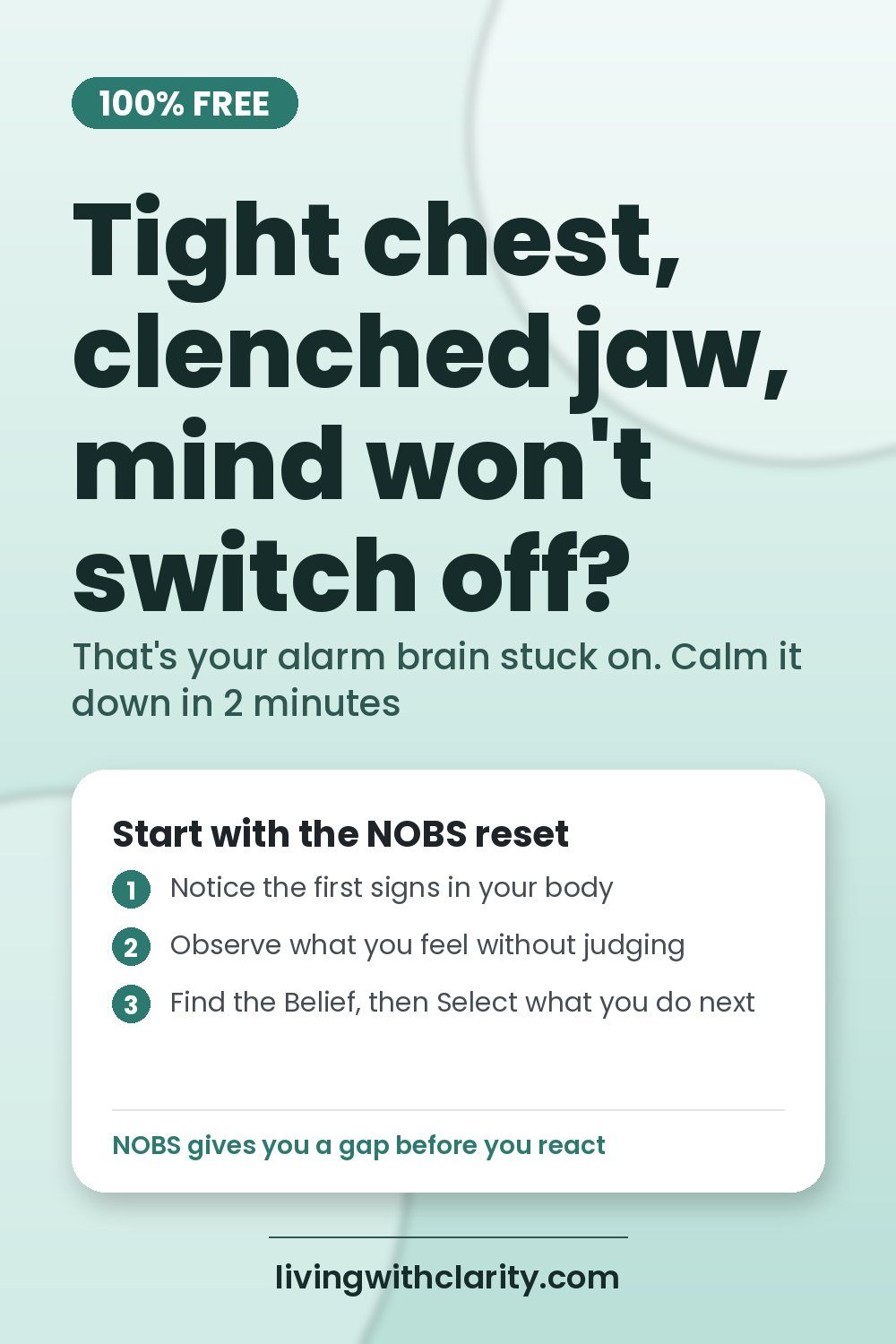
Tight chest, clenched jaw, mind won't switch off?
That's your alarm brain stuck on. Here's how to calm it down in 2 minutes.
Shoulders up round your ears. Frowning without noticing. Stomach in knots. Your mind racing through everything you have to do, or going over something you said. That constant tense, on-edge feeling is the alarm part of your brain stuck on, even when nothing is actually wrong. It's also why you end up snapping at people you love, or lying awake at 3am replaying things. I'm Mia, and everything on this site helps you switch that alarm off: a 2-minute reset card, short audios and printables that help you feel calmer right now. It's all free. No sign-up, nothing to buy.
Calm a tight chest and racing heart in about 2 minutes, or before you snap at someone.
ClearGet everything that's going round your head onto paper so your mind can stop replaying it.
RestedWind down at bedtime, or at 3am, when you're tired but your mind won't stop.
Focused1-minute audios to loosen the tension on a rushed morning, in the afternoon slump or before a meeting.
How it works
Why you react before you think, and how to stop
Your alarm brain reacts first
When something stresses you, the alarm part of your brain (the amygdala) fires before you've had time to think. It can't tell the difference between real danger and a rude email. That's why you shout, freeze, or lie awake worrying.
The gap is a short pause before you react
One slow breath out is enough to open it. In that pause, the thinking part of your brain catches up, and you get to choose what you do next instead of reacting on autopilot.
NOBS helps you use the gap
Notice the first signs in your body. Observe what you feel without judging yourself. Find the Belief behind the reaction. Select a different response and one small thing to do.
Start here
Get the free NOBS card and 2-minute audio
Everything else on this site builds on these four steps. Use the card the next time your chest goes tight, your mind starts racing, or you feel yourself about to snap.
Free tools · no email needed
More free tools for specific moments
The NOBS reset: pause before you snap
When you're about to shout at the kids or you're lying awake spiralling, your alarm brain has taken over. These four steps give you a pause before you react. A free one-page card and a 2-minute guided audio.
Get it free → FreeA 2-minute cortisol reset for calmer mornings and evenings
If you wake up already tense, or you're still wound up at 10pm, your alarm brain hasn't switched off. This free one-page sheet gives you a 2-minute reset for the morning and one for the evening, plus a 2-minute breathing audio.
Get it free → FreeCan't sleep because your brain won't switch off? Try this tonight
Lying in bed going over tomorrow, or awake at 3am replaying something? The free Sleep Pack gives you a bedtime routine, a page to write down what's on your mind, and the Shutdown Sequence, a 1-minute audio to help you wind down.
Get it free → FreeStop overthinking: write it all down in 2 minutes
If you keep going over the same worries (what you said, what's due, what might go wrong), this free one-page sheet helps you get them out of your head and onto paper, so your brain can stop holding onto them.
Get it free → FreeDoing everything for everyone? Use this one-page list to lighten the load
If you're the one who keeps track of everything at home and at work, this free one-page list helps you write down everything you're carrying, see what isn't actually yours, and pick one thing to hand over or drop this week.
Get it free → FreeTen 1-minute audios for stressful moments
Short guided audios for the moments your stress spikes: a rushed morning, the afternoon slump, before a hard meeting, or when you're about to snap. Press play and follow along. Each one helps you pause and calm down before you react.
Get it free → FreeFree calm phone wallpapers
Free quote wallpapers for your lock screen. Each time you pick up your phone, it reminds you to take one slow breath out before you react.
Get it free → FreeThe free 21-Day Reset: feel calmer in 5 minutes a day
A short practice and audio for each of 21 days. It helps you practise pausing before you react, so you get stressed less often and calm down faster. Read it on the site, or get one day at a time by email.
Get it free →From the blog
Free articles on overthinking, stress and sleep
Everything here is free. If you like the way I explain things, my books are here.